

logo ×

  • This field is for validation purposes and should be left unchanged.

Finding the Fish

June 2026 – Saltwater Angler Magazine

“What do you look for when you’re trying to find a spot to fish?”

It’s the question I hear almost every day—and the honest answer might surprise you. I’m not always looking for fish. I’m looking for signs.

Because when you’re running 30 knots across miles of shoreline, open bay, or back lakes that all look the same, fish don’t give themselves away. But the environment does. Learn to read it, and it will lead you straight to them.

For me, that understanding comes from a lifetime on the water. For others, it takes a little time and intention. Spring is one of the best times to start dialing this in because bait is everywhere. This time of year, life fills the water, and that abundance becomes your biggest advantage—if you know what to key in on.

Focus on the details most people overlook. Watch the water surface for subtle movement that doesn’t match the wind. Pay attention to slight changes in water color. Notice tide movement, wind direction, and bird activity. These aren’t random occurrences—they’re signals pointing you toward feeding fish.

Add a little preparation before you even leave the dock—checking moon phases and feeding windows—and suddenly you’re no longer guessing. You’re making informed decisions about where your day is likely to unfold.

Lately, glass minnows have been the key for me, and they’ve been thick across the entire system. A couple of weeks ago, on a tough afternoon when the bite had been slow, I eased into one of our back lakes and spotted two pelicans diving aggressively while a few others sat nearby waiting their turn. The water around them had just enough stain to stand out from the clearer water surrounding it.

That was all I needed to see.

I stayed well off the area, circled wide, and approached from upwind so I wouldn’t spook the fish. For the next hour and a half, every cast produced redfish from ten to twenty-six inches, and we boxed a three-man limit in short order. That kind of success doesn’t happen by accident—it comes from recognizing the clues and trusting what they’re telling you.

A big part of finding fish is simply covering water and paying attention. Subtle changes can be easy to miss if you’re not focused. My customers often ask, “Where are we going?” while I’m running from one area to another.

My answer is usually, “We’ll know when we get there.”

That tends to earn a few uncertain looks, but there’s truth behind it. This process isn’t about running to a specific spot—it’s about reading conditions as they develop and letting those conditions guide your decisions. Not all who wander are lost… some are just paying attention.

Take today, for example. A late-season cool front has pushed through, bringing a strong north wind and a noticeable drop in temperature. Conditions like this can change everything overnight. Water temperatures fall, clarity shifts, and fish reposition accordingly.

This is where thinking ahead becomes critical.

You have to ask yourself: where can I find protected water out of a strong north wind? Which areas will have slightly off-colored water that gives fish an advantage as ambush predators? How do today’s conditions compare to yesterday’s, and how will that affect fish behavior?

When you begin approaching your trips with these kinds of questions in mind—fishing based on environmental factors instead of chasing reports—you gain a whole new level of confidence. You’re no longer relying on luck or secondhand information.

A little preparation goes a long way. While others are racing across the bay chasing rumors or following the crowd, you’ll be moving with purpose—calm, observant, and informed. And more often than not, you’ll find yourself on the fish.

Because at the end of the day, catching fish is only part of the reward.

Understanding why you caught them—that’s what keeps you coming back.

Capt Stephen Boriskie

Mid Coast Outfitters POC

www.MidCoastFishHunt.com

512.589.1916

CCA Currents

Oct/Nov 2025 Forecast for Mid Coast

Fall Fishing: Abundance Defined

Fall fishing on the Middle Texas Coast means many things to me, but one word sums it up best — abundance.

When someone asks me, “What’s your favorite time of year to fish?” my answer has never wavered: October and November. There’s abundance in everything this season — the schools of bait, the number of anglers, and, most importantly, the sheer variety of fish. Speckled trout, redfish, black drum, flounder, sheepshead — if it swims, chances are it’s biting right now.

Yes, Fall is a busy time for most, but the best days are right around the corner. With a little help from Mother Nature, the water is cooling, tides are rising, and the October moon is about to work its magic. More water means more oxygen, which means fish come alive — and so do the anglers. Shorter days give fish more recovery time under cover of night, setting the stage for spectacular daytime action.

But here’s the catch — you have to be here to enjoy it. Make it a plan, not a wish. Dust off that boat or call your favorite captain and carve out time for yourself and your family to enjoy this angling paradise.

Whether you’re chunking bait or slinging artificials, this is the time to break out the whole tackle box. Walk a reef, stalk a lonely shoreline, and feel the thump of a hookset under crisp autumn skies. At Mid Coast Outfitters POC, we’re seeing a healthy mix of clients — some sticking with bait in the boat, others wading with lures — all sharing in the same thrill.

Let’s make this fall one for the record books. Circle those dates, grab your gear, and get here while the bite is hot — the fish won’t wait, and neither should you

Capt Stephen Boriskie

Mid Coast Outfitters POC

MidCoastFishHunt.com

512-589-1916

The story here lately on the middle Texas coast has been high wind. Growing up on the Texas coast, I can remember our typical summertime pattern being calm mornings and breezy afternoons. However, there are other times throughout the summer when you get a hard, consistent breeze that keeps the mosquitoes down, but rips your hat off before you even get on the boat! Translate that into trying to find fish and it means adjusting your pattern, and your location, for successful angling.

The first question out of the mouth of my customers each morning has become, “How’s the fishing been?” My face has never been able to tell a lie, so I always have to share the flat out truth, which is, “The wind has been high, and we have been adjusting our fishing patterns in an attempt to find the fish.” Ultimately, the day has been a bit of a grind, but the fish are around and we have been catching good numbers of trout and an occasional redfish. The key is you have to be flexible and not give up, and accept the fact that there are going to be periods of time in between the catches of those fish that you will be inviting home with you to put on your dinner table.

What do I do when I blast off in the face of a 28-knot southeast wind that I know has churned up most the fishing spots that we have been enjoying under calmer conditions? I look for protection from the wind in the form of high spoil banks, as well as protected coves and shorelines just out of the reach of the wind. Both of these options have been working for me, but it’s been a slower than usual bite. Such conditions, however, help anglers hone their skills because the wind puts so much whip in your line from side to side that you really have to work to stay in touch with your bait and to feel when that fish eats. It has been the true meaning of the word fishing, but for those hanging in there it’s been catching as well.

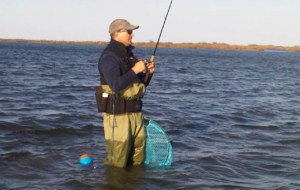
There is never a good time for you to have substandard gear, because you do not want to ever miss the fish once you’ve got it hooked. If table fare is your target, carry a landing net with you while wading, or if you are fishing out of the boat be sure you have a long handle net (rubber webbing is my favorite). Make sure your hooks are sharp and that your line is in good shape. Make sure your reel is well taken care of and that your rod is free of any line-guide issues that might cut your line. It’s one of those times when you need to make certain you have everything all together if you expect to bring fish to your stringer, or to the boat.

As we enter the mid-June, we are looking at the tropics like everyone else in the area and we are seeing some early development. As we hope and pray these storms are minimal (or go away altogether), one constant remains, and that is that this wind it is here to stay for a while. Your next fishing outing will be much more productive as long as you plan for success. Don’t wait until you get in the water to check your reel, line, guides and other important gear. The last thing you want to experience next time you’re bowed-up is to suddenly notice your rod tip straighten during the heat of the battle, as you suddenly stare at the nick in your rod tip that cut the only connection between you and a trophy speck!

Capt Stephen Boriskie

Mid Coast Outfitters POC

512.589.1916

www.midcoastfishhunt.com

As a full time, fishing guide years now I have had opportunities that I had dreamed of for most of my life. The day I received my driver’s license I remember hooking up my dad’s boat and trailering to the ramp!  Since that time, I have been lucky enough to live on or near the coast and take advantage of our many coastal resources. Whether it was boat or wade fishing, live or artificial bait, soft plastics or top water, morning-afternoon-evening, or any day of the week, I found time to be out here on the salt water in pursuit of Speckled Trout, Redfish, Flounder and on and on. This was instilled in me from the days growing up in Pasadena since my dad was an avid fisherman and took the kids to walk the Galveston Jetties and then later on to fish the bays out of a boat that we were fortunate to afford. Today I have that same passion and drive to be out on the water but now I get to teach what I have learned and share the precious resources with not only friends and family but customers too!  I had always heard the saying “Do what you love, the money will follow”, but never really understood it. Now being a fishing guide no matter what will not put you in the headlines making a fortune…what it has done though for me is allow a modest living in the outdoors!  My lifelong dream!

Most of my trips these days are taking customers in the boat with bait. We experience a lot of corporate customers entertaining their associates. Most have some experience fishing, some freshwater only, some saltwater, and some no experience at all and this is their first time to wet a hook. I will take them all and my goal is to teach them something that works for them to catch that fish!  Most times I learn from them too and then apply that to my next group of anglers. Sometimes like the other day I get anglers already fluent in the art of wading with lures! This is my preferred method of catching these spots and dots down here and hopefully the requests of lure trips will rise.

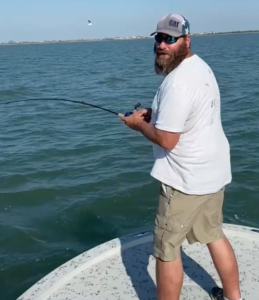
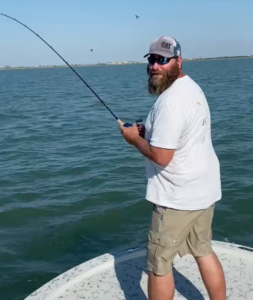
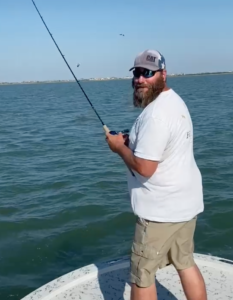
June is upon us and that means the fish are agreeable to most presentations of lures. I have been successful though in the water column versus on top and with 1/4 to 1/8 oz. jig head weights with a combination of soft plastics including the TTF Trout Killer, Killer Flats Minnow and the Killer Hustler.  It hasn’t mattered that much on the color but I have been trying to stay with a dark color body and bright tail like the morning glory/Chartreuse combo, red/white and purple/chartreuse and they have all produced. The key has been to work the water column entirely and that means (CAST-COUNT-TWITCH-REEL)! Cast the lure downwind to get the most sensitivity having a straight line to the lure.  Count to three, then Twitch the rod tip up twice, letting it fall while Reeling up the slack. I have used this simple method for countless years and it works well for me. The fish usually will pop that lure on the downfall which is perfect since your next move was Reeling anyway-it’s easy to set the hook and Reel that fish in. Keep your rod up in the air and feel the pressure of the bow in it. So many times, I will see an angler set the hook then reel and set it again with slack in the line-and they lose the fish. Keep that rod bowed up, and pressure on the hook which is stuck in a nice trout’s mouth!  If you are on a keep fish mission have a wade fishing net with you. The floating nets are good because they’re not wrapped around your legs under water causing you to trip on the tangled mess. These also work as a temporary live well if you want to leave the fish without sticking a stringer through its mouth. However, the ring foam donut type floating nets may be a better bet for you, they are bulky but hard to beat on a long wade. I see guys making a big mistake consistently on the method of adding the fish to a stringer. Those things don’t come with instructions as far as I know but do this and you will have the best chance at keeping the fish alive (and not spoiling) until you get back to the boat. Use the sharp end of the stringer stick to punch into and through the fish’s thin flesh under its mouth near the center…avoid running it through the mouth and out of the gills.  This way the fish swims more freely and can get the oxygen it needs and will not usually float beside you stiff as a board!

I have heard enough stories of waders having run ins with stingrays to scare me into donning the most protection I am comfortable with. That said I am wearing ray guards around my lower legs now just to be sure. I still have boots that can be punctured but at least I feel a bit more protected. Also, the menacing varieties of jellyfish and man o war are prolific especially the deeper we get into Summer, so wear some protection for those guys too.  Simply put on long pants and ease into the water.  Three of my waders this past week were hit by these fiery globs and were sent into different degrees of pain lasting too long and making their wade very uncomfortable.

There are so many ways to get out and enjoy our coastal resources but the key is to find the time to go!  I say today is the day so get out and join us on the water and see what this sport is all about.

Captain Stephen Boriskie

Mid Coast Outfitters POC

512.589.1916

www.midcoastfishhunt.com

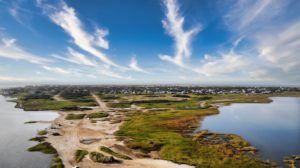
Port O’Connor is a sleepy fishing village where life slows down and the outdoors calls your name. Spend your days casting a line in our nearby shallow bays or heading a few miles offshore for deeper water adventures. Walk-in anglers can enjoy our lighted fishing pier, the little jetties, or Boggy Bayou. If kayaking is more your speed, Port O’Connor offers many well-marked trails that are easily accessible from local boat ramps, leading you into the peaceful back lakes.

Beyond the fishing, visitors often find themselves relaxing on the sandy shores of Kingfisher Beach or taking a quick boat ride to one of our Gulf beaches, like Saturday Beach or Sunday Beach, for a day of sun and surf. Before you head home, be sure to pick up a souvenir from our local shell shop and visit the other hometown businesses offering the latest tackle, coastal apparel, and great food.

I love taking families fishing along the saltwater of the Middle Texas Coast. Truth be told, any stretch of the Texas coastline can offer a great day on the water—but there’s something special about this part of the middle coast. Around here, there are very few days when the weather keeps you from running safely. That’s because of the countless smaller cuts, guts, back lakes, and hidden gems scattered across the area—places that offer both protection and opportunity, and sometimes only reveal themselves to those willing to explore a little deeper.

Even when the wind picks up—and it will—you can still find yourself on a comfortable ride to productive fishing water. That’s a luxury not every part of the Texas coast can offer.

Having lived and fished in the Trinity Bay and Galveston Bay areas, I can tell you firsthand the difference is hard to believe. Up there, you’re often dealing with wide-open water, where the wind has a long runway to build and test both your boat and your patience. Down here on the middle coast, the geography works in your favor. The shoreline, marshes, and backwater systems provide a level of protection that takes the edge off those harsh spring winds and the sudden attitude shifts that come with fall cold fronts.

Summer has its moments too, no doubt—but even then, the prevailing southeast winds bring a certain consistency. You learn their rhythm, you trust their direction, and that builds confidence every time you ease the throttle forward. A westerly wind will show up now and then, just to remind you who’s boss—but around here, those days are more the exception than the rule.

That kind of fishable water doesn’t just benefit seasoned anglers—it opens the door for families. It creates an environment where kids can be comfortable, where the ride is smoother, and where the focus shifts from fighting the conditions to enjoying the time together.

And those are the moments you don’t want to miss.

No matter where you fish, always—always—capture the moments. Maybe not on film anymore, but certainly digitally. Photos are the bridge to past fishing trips and the memories that come with them—celebration, laughter, a little friendly competition, and the kind of camaraderie that only seems to happen out on the water.

Add kids to the mix, and those moments take on a whole new level of meaning.

There is nothing quite like the smile of a young angler catching a fish—any fish, big or small. For everyone else, it’s a great moment. For the one holding the rod, it becomes something more. It’s a memory that sticks, one that often finds a permanent place deep in who they become.

And when you capture that moment in a photograph, you’re holding onto something you can revisit again and again.

That’s the real gold at the end of the rainbow.

TAKE A KID FISHIN’

Teach a kid to fish and they’ll be hooked for a lifetime.

But take your whole family fishing… and you’ll hook something even bigger—memories.

There’s something special about being out on the saltwater together. The laughter when someone misses a cast. The cheers when a rod bends. The quiet moments between bites when the breeze rolls across the bay and everyone just breathes it in.

Those smiles, those laughs, that kind of family fun… it’s hard to match.

Sure, take a kid fishing.
But better yet—take your family fishing, and make the kind of memories that last a lifetime.

One phrase that has followed me through most of my guiding career — and long before that — is, “according to the forecast.” Now, it’s not that I expect forecasters to get the weather and wind right every single time. That’s why I always build a little wiggle room into my daily plan, just in case conditions don’t hold the way they’re supposed to.

When you’re planning a day on the salt water, the weather and wind forecast are always part of the equation. That’s just a given. What really matters is what you do with that information. That’s what can make your day a success — or turn it into something a little less favorable.

Guiding anglers and trying to put them on their personal best is a tall order. Still, I’ve been fortunate to host many groups over the years where we did exactly that. Of course, there are also trips that make you want to hide your head, and those are the days when the old standby phrases come out: “Well, you should’ve been here yesterday,” or “The bite must just be off today.”

But one thing I know for certain: not a single guide I know fails to give everything he or she has to make that day on the water the very best it can be. If a trip doesn’t end exactly the way the guests hoped, it usually isn’t because of a lack of planning or effort. More often than not, it’s just one of those rare anomalies — a tough day wrapped in circumstances you can’t always control.

Still, it’s worth remembering: there really are no bad days. Just days that could’ve been a little better. Or, as we like to say, a bad day fishing is still better than a good day working.

Reading Between the Lines of a Forecast

A forecast is a starting point, not a guarantee. Over the years I’ve learned that the numbers on the screen rarely tell the whole story. A forecast might say fifteen knots out of the southeast, but what matters more is how fast it gets there, how steady it holds, and what the water was doing the day before.

Guides spend as much time reading what isn’t in the forecast as what is. If the wind is predicted to jump mid-morning, I’m already thinking about protected shorelines, back lakes, or marsh drains where that same wind might actually help position bait. Sometimes the forecast is telling you where not to go — and that can be just as valuable as telling you where to start.

Five Things I Watch Beyond the Forecast

The forecast gives you the outline, but these five things often determine how the day really unfolds.

Wind Direction vs. Wind Speed
Speed gets all the attention, but direction can matter more. A moderate wind pushing into a shoreline can concentrate bait and create a feeding zone, while the same wind blowing water out of an area can scatter fish quickly.

Water Movement
Tides don’t always behave exactly like the chart predicts. When water starts moving through drains, cuts, or along drop-offs, fish will often position themselves to take advantage of that current.

Bait Activity
Bait rarely lies. Nervous mullet, shrimp popping, or birds working can reveal feeding activity even when conditions look less than ideal.

Water Color
Wind and tides can churn water quickly, but cleaner water nearby can hold fish. Sometimes a short run to find better water clarity makes all the difference.

Barometric Pressure Changes
Pressure shifts often trigger feeding windows. Fish frequently become more active just before or during a weather change.

When the Forecast Gets It Wrong

I remember one particular trip where the forecast and reality decided to go their own separate directions.  The prediction called for south winds blowing around 15-18 mph early in the morning, with those winds supposed to drop by about four miles per hour each hour before a front arrived roughly four hours later. Looking at that forecast the night before, I remember thinking, Perfect. I can work around that.

The plan was simple. Fish protected water early while the wind was still up, then slide out and work more open areas as things gradually settled down before the front arrived.  At least that was the plan.

Instead of dropping four miles per hour each hour, that stubborn south wind did the exact opposite. It increased by about four miles per hour every hour. What should have been a gradual calming trend turned into the wind building stronger and stronger as the morning went on.

By the time the front got close, we had seen about a twelve-mile-per-hour swing in the wrong direction. Water that should have been fishable became churned up, boat control got tougher, and areas I had planned to fish later in the trip were completely off the table.  In the end, I made the call to head in early.

No guide likes cutting a trip short, but sometimes the smartest decision on the water isn’t forcing a plan that no longer works. Conditions changed, and safety and comfort for the anglers always come first.

That day served as a reminder of something every captain eventually learns: forecasts help you plan the trip, but they don’t guarantee the conditions you’ll actually fish in.  The real job begins when the water starts doing something different than what the forecast promised.

When a Window Opens

Not every forecast that looks bad turns into a bad day.  I remember another trip where the weather was predicted to make fishing nearly impossible. The front was supposed to arrive early, the wind was expected to howl, and most folks would have probably written the day off before ever leaving the dock.

Still, experience has taught me that sometimes the weather gives you a small window if you’re ready for it. Just in case that opportunity showed up, I stopped on the way and picked up some live shrimp at the last minute. They stayed in the well most of the morning while we worked through the conditions and waited to see what the weather would actually do.  Then something interesting happened.  The front stalled.

It didn’t stall long, but it stalled just enough to give us a short window where the wind laid down and the water settled. When that happened, we made our move to one last stop I had in mind.  That’s when those shrimp finally came into play.

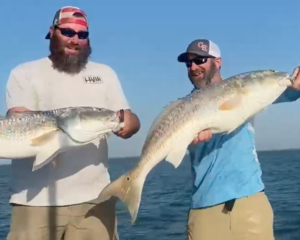
Within a short time we were catching fish steadily, and before it was over we had boxed limits of redfish along with a few solid black drum to round out the catch.

It turned into one of those trips that reminds you how quickly things can change on the water. A day that started with a forecast that looked almost impossible ended with a boat full of smiles and a good box of fish.  Sometimes preparation meets opportunity.

And as the old saying goes, I’d rather be lucky than good — but it sure helps to be ready when luck shows up.

Closing Thought

Forecasts will always be part of planning a trip, but they should never dictate the outcome of the day. The real difference lies in preparation, adaptability, and the willingness to think a little outside the box when conditions change.

Because in the end, the goal isn’t just to follow a forecast.  It’s to find the fish anyway.

Spring Changeover: When the Bay Fills Back Up

April on the Texas coast is less a month and more a movement.

The tides begin to breathe deeper again. What was lean and wintry grows full and generous. Shorelines that felt high and dry start swallowing water. The bay system rounds out, fills in, and warms up. With that warmth comes life — nervous rafts of baitfish flickering in the shallows, shrimp ticking across shell, mullet flipping like they’ve got somewhere important to be.

And when the groceries show up, so do the customers.

Speckled trout. Redfish. Black drum. Flounder. You can catch all of it this time of year… or none of it. The difference, more often than not, is presentation.

Reefs: My Spring Starting Line

When the water rises and settles into that comfortable spring rhythm, I love fishing reefs from the boat. Artificial reefs, old-school middle coast shell — we’ve got plenty of both, and they hold fish when the tides return.

My confidence rig this time of year? A popping cork and shrimp.

Live shrimp if I’ve got it. Dead shrimp if I don’t. Both will flat-out work.

The key isn’t overcomplicating it. Set up a drift across the reef and let the cork talk. Pop it with intention, not aggression. Let it sit. Let it breathe. Those fish are cruising with purpose, shadowing bait, and they’ll investigate the commotion.

If the wind allows, I’ll anchor and pick apart a stretch more methodically. Some days the drift bite is steady. Other days, anchoring up and working a zone patiently is what flips the switch. And when the mood hits? I’ll shut everything down and slide over the side to wade it.

There’s something about standing knee- to thigh-deep on shell in April, cork dancing in the tide, that just feels right.

Back Lakes: Soft Mud, Solid Results

As water pushes farther back into the lakes, another opportunity opens up.

The mud back there this time of year? Let’s just say it’ll test your calves and your character. But the reward often outweighs the workout.

Wading the back lakes during spring changeover can produce quality trout and redfish that have moved shallow to feed. With more water covering that marshy terrain, fish spread out — and they’re comfortable. They’re hunting.

Slow down. Cover water methodically. Pay attention to bait activity and subtle pushes along the bank. A soft-bottom slog can turn into a memory you’ll talk about all summer.

It’s All in the Offering

This season is generous — but it’s not automatic.

You can drift fish. Anchor fish. Wade fish. Free-line shrimp. Throw under corks. However you choose to pursue them, commit to the presentation. Let the bait look natural. Match what’s happening around you. If the mullet are moving slow, don’t fish like you’re late for supper.

Fish are following the buffet line. Make your offering look like it belongs.

The Bigger Picture

Spring on the Texas coast isn’t just about filling the box.

It’s about the birds working a shoreline. It’s about the first warm breeze that doesn’t bite back. It’s about catching, releasing, keeping, cooking — or just leaning on the console and telling stories with your buddies while the tide does what tides have always done.

A bad day fishing? Still better than most days anywhere else.

So as April rolls in and the bays swell back to life, get out there. Wade the mud. Drift the reefs. Pop that cork. Let the season unfold around you.

Because when the water rises, so does the opportunity — and it won’t wait around forever.

ADJUSTING TO CHANGING CONDITIONS

More than 12 years ago I began guiding for hire as a full time fishing guide in the Port O’Connor and Seadrift areas of the Texas Middle Coast.  My parents had always taught me it was better to keep your mouth shut and your head down and simply do your job when coming into a situation where you were new to something and they were very wise.  I had a tremendous amount of respect for these guides in these waters and over the years I have been a full time guide with them, that respect has not diminished.  Most of those original guides are actually still here guiding every day and doing what they have always done very well, which is entertaining the customer and putting them on fish.  That’s a pretty good track record no matter what you do for a living.

One of the very first lessons I learned was that you need to adjust to the wind and the weather in order to keep the customers on the fish.  A trip where you don’t catch keeper fish happens once or twice a year, but to work in this business and to stay booked in the future you must put the customers on the fish the majority of the time.  There is no room for getting skunked!  Fellow guides, while always there to help you solve problems, will not tolerate less than a good catch and happy customers – which are not mutually exclusive.  A first class operation with a reputation to uphold means to resolve problems on the water, you need help from other area guides.  If a guide falls short, you can bet other guides are on the phone with them or texting information and trying to pull them up and ‘coach’ them up, a courtesy that carries retribution.

So what is this idea of adjusting to the wind and the weather all about?  Experience is the best way to put it, but how do you get that experience if you don’t have years of time on the water?  We help one another to think about what we are going to do, where we are going to go, and what has worked in the past. Then once out on the water, we are on the phone discussing locations if someone is in trouble and the earlier in the day the better.  Why would we be bouncing back and forth ideas and information?  The goal of everyone, including the guide and the customer in most cases, is to have the best information we can get and share what is working. Even more important perhaps, is to share what isn’t working.  That is customer service at its best, especially when you consider each guide is putting his own success at risk by sharing vital catching information with the others, just to ensure the success of everyone to be sure all customers have a good chance at catching the most fish possible.  This is especially true when the customer is a multi-boat charter, showing back up at the dock with little compared to others who have a lot isn’t the way to get return anglers on the boat.

When the norther has pushed through and the wind is blowing 30 plus mph for more than eight or so hours, you can expect that the water has been pushed from the North shoreline to the South shoreline and that the lakes on the island around here are filling up with water and wind blown bait!  Find a way to safely brave the bay and get to where you think the bait may be trapped against a shoreline.  The redfish will probably be hanging out there taking advantage of the helpless critters being pounded by the wind.

Dodging thunderstorms was not as easy in the past, but really it is easy when you account for all the technology at our fingertips.  Today’s smartphones are your second best source of information – the first being your own eyes, gut feeling and common sense.  If you see a black cloud bearing down on you and it’s obvious there is impending trouble on your horizon, then take cover. Don’t assume you can avoid it all with a rain suit.  Aside from that use any of the variety of apps on your phone just like we do and check the radar!  Personally, I use WeatherBug but other guides use different apps which are really helpful because one app may not be showing what is really happening while another tells you to take cover now!

Common sense always supersedes all others, but with a combination of information from your buddies, your phone, and your own eyes it is possible to smack some really good fish ahead of cold fronts, between thunderstorms and during less than perfect weather out on the salt water!

Stay safe, have fun and don’t take it too seriously, and you will not only find plenty of fish for the table, but you may also catch that personal best fish or maybe help a fishing buddy do the same and make memories that last a lifetime.

Capt Stephen Boriskie

Mid Coast Outfitters POC

512.589.1916