

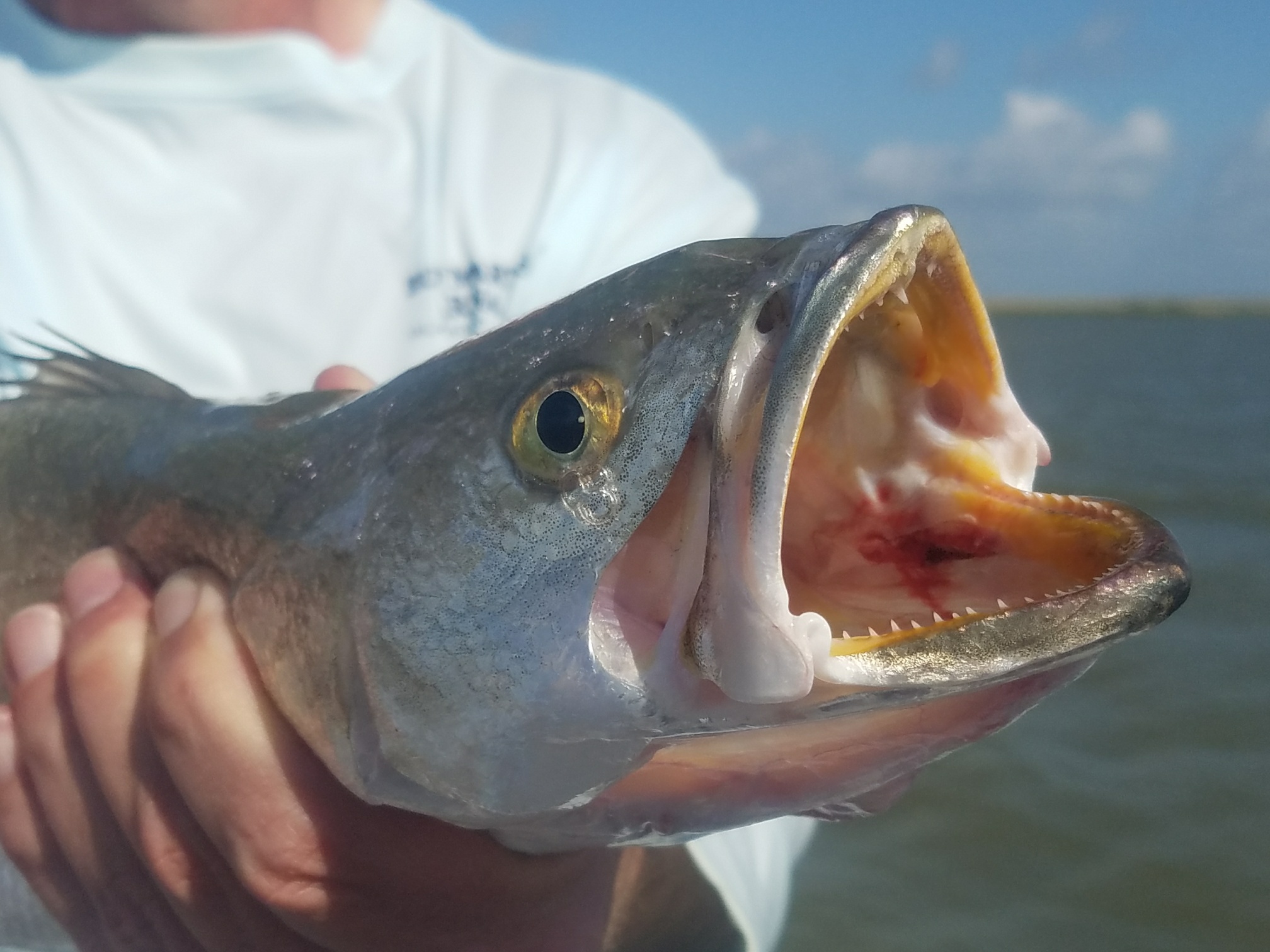
The story here lately on the middle Texas coast has been high wind. Growing up on the Texas coast, I can remember our typical summertime pattern being calm mornings and breezy afternoons. However, there are other times throughout the summer when you get a hard, consistent breeze that keeps the mosquitoes down, but rips your hat off before you even get on the boat! Translate that into trying to find fish and it means adjusting your pattern, and your location, for successful angling.
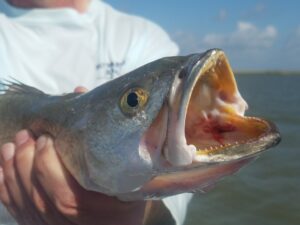
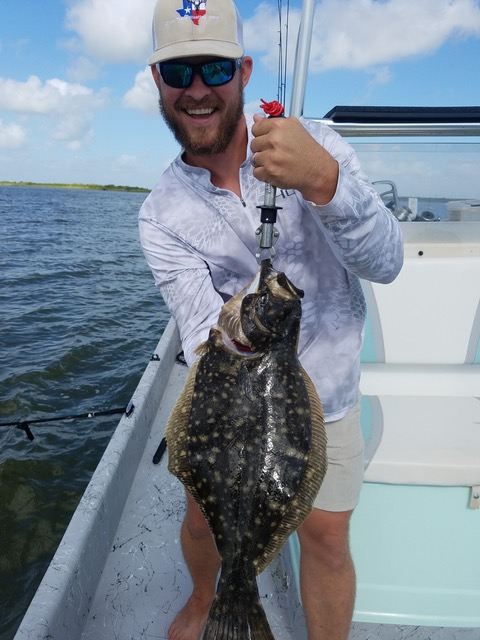
The first question out of the mouth of my customers each morning has become, “How’s the fishing been?” My face has never been able to tell a lie, so I always have to share the flat out truth, which is, “The wind has been high, and we have been adjusting our fishing patterns in an attempt to find the fish.” Ultimately, the day has been a bit of a grind, but the fish are around and we have been catching good numbers of trout and an occasional redfish. The key is you have to be flexible and not give up, and accept the fact that there are going to be periods of time in between the catches of those fish that you will be inviting home with you to put on your dinner table.
What do I do when I blast off in the face of a 28-knot southeast wind that I know has churned up most the fishing spots that we have been enjoying under calmer conditions? I look for protection from the wind in the form of high spoil banks, as well as protected coves and shorelines just out of the reach of the wind. Both of these options have been working for me, but it’s been a slower than usual bite. Such conditions, however, help anglers hone their skills because the wind puts so much whip in your line from side to side that you really have to work to stay in touch with your bait and to feel when that fish eats. It has been the true meaning of the word fishing, but for those hanging in there it’s been catching as well.
There is never a good time for you to have substandard gear, because you do not want to ever miss the fish once you’ve got it hooked. If table fare is your target, carry a landing net with you while wading, or if you are fishing out of the boat be sure you have a long handle net (rubber webbing is my favorite). Make sure your hooks are sharp and that your line is in good shape. Make sure your reel is well taken care of and that your rod is free of any line-guide issues that might cut your line. It’s one of those times when you need to make certain you have everything all together if you expect to bring fish to your stringer, or to the boat.
As we enter the mid-June, we are looking at the tropics like everyone else in the area and we are seeing some early development. As we hope and pray these storms are minimal (or go away altogether), one constant remains, and that is that this wind it is here to stay for a while. Your next fishing outing will be much more productive as long as you plan for success. Don’t wait until you get in the water to check your reel, line, guides and other important gear. The last thing you want to experience next time you’re bowed-up is to suddenly notice your rod tip straighten during the heat of the battle, as you suddenly stare at the nick in your rod tip that cut the only connection between you and a trophy speck!
Capt Stephen Boriskie
Mid Coast Outfitters POC
512.589.1916
www.midcoastfishhunt.com