

Finding the Fish
June 2026 – Saltwater Angler Magazine
“What do you look for when you’re trying to find a spot to fish?”
It’s the question I hear almost every day—and the honest answer might surprise you. I’m not always looking for fish. I’m looking for signs.
Because when you’re running 30 knots across miles of shoreline, open bay, or back lakes that all look the same, fish don’t give themselves away. But the environment does. Learn to read it, and it will lead you straight to them.
For me, that understanding comes from a lifetime on the water. For others, it takes a little time and intention. Spring is one of the best times to start dialing this in because bait is everywhere. This time of year, life fills the water, and that abundance becomes your biggest advantage—if you know what to key in on.
Focus on the details most people overlook. Watch the water surface for subtle movement that doesn’t match the wind. Pay attention to slight changes in water color. Notice tide movement, wind direction, and bird activity. These aren’t random occurrences—they’re signals pointing you toward feeding fish.
Add a little preparation before you even leave the dock—checking moon phases and feeding windows—and suddenly you’re no longer guessing. You’re making informed decisions about where your day is likely to unfold.
Lately, glass minnows have been the key for me, and they’ve been thick across the entire system. A couple of weeks ago, on a tough afternoon when the bite had been slow, I eased into one of our back lakes and spotted two pelicans diving aggressively while a few others sat nearby waiting their turn. The water around them had just enough stain to stand out from the clearer water surrounding it.
That was all I needed to see.
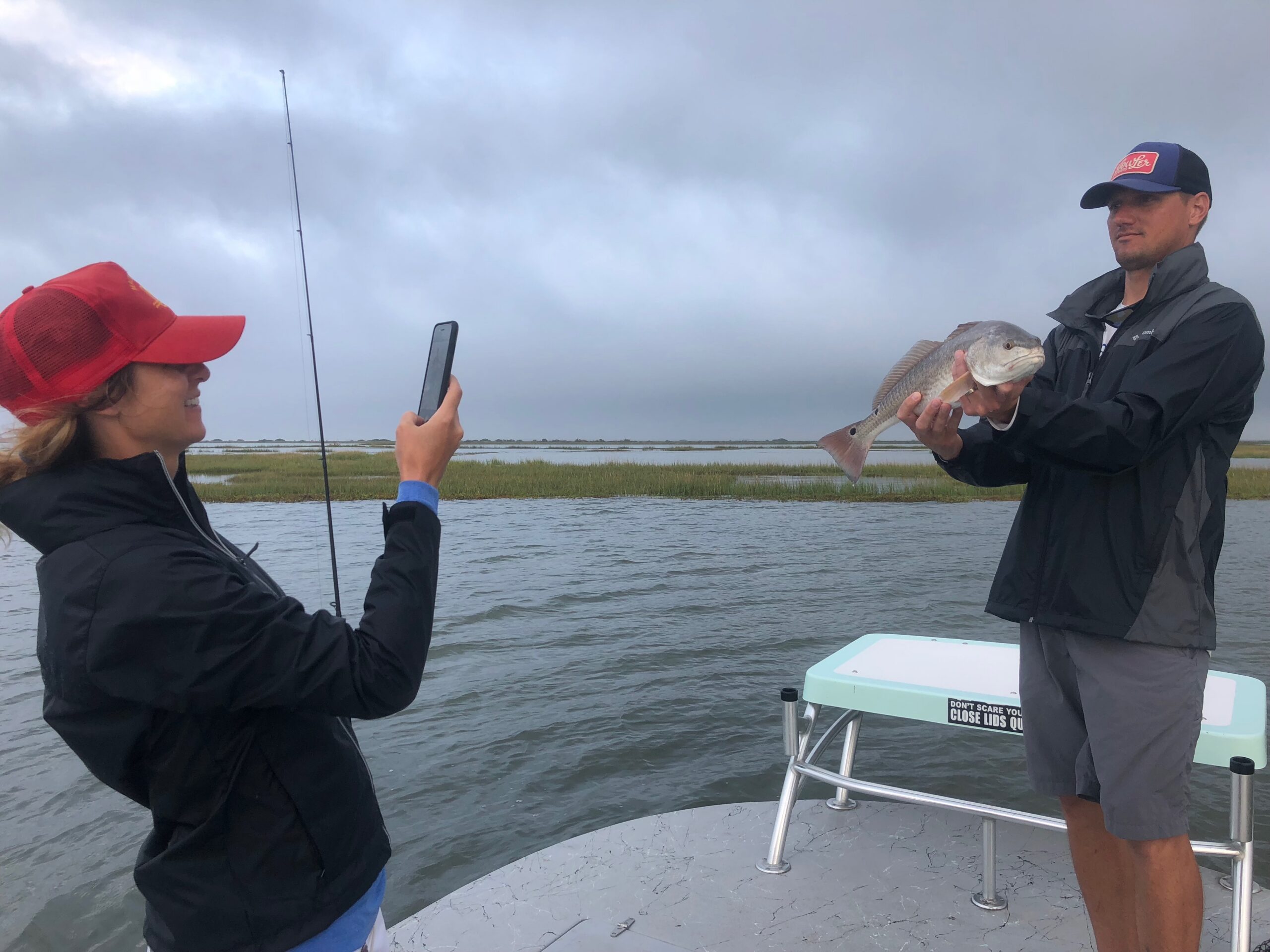
I stayed well off the area, circled wide, and approached from upwind so I wouldn’t spook the fish. For the next hour and a half, every cast produced redfish from ten to twenty-six inches, and we boxed a three-man limit in short order. That kind of success doesn’t happen by accident—it comes from recognizing the clues and trusting what they’re telling you.
A big part of finding fish is simply covering water and paying attention. Subtle changes can be easy to miss if you’re not focused. My customers often ask, “Where are we going?” while I’m running from one area to another.
My answer is usually, “We’ll know when we get there.”
That tends to earn a few uncertain looks, but there’s truth behind it. This process isn’t about running to a specific spot—it’s about reading conditions as they develop and letting those conditions guide your decisions. Not all who wander are lost… some are just paying attention.
Take today, for example. A late-season cool front has pushed through, bringing a strong north wind and a noticeable drop in temperature. Conditions like this can change everything overnight. Water temperatures fall, clarity shifts, and fish reposition accordingly.
This is where thinking ahead becomes critical.
You have to ask yourself: where can I find protected water out of a strong north wind? Which areas will have slightly off-colored water that gives fish an advantage as ambush predators? How do today’s conditions compare to yesterday’s, and how will that affect fish behavior?
When you begin approaching your trips with these kinds of questions in mind—fishing based on environmental factors instead of chasing reports—you gain a whole new level of confidence. You’re no longer relying on luck or secondhand information.
A little preparation goes a long way. While others are racing across the bay chasing rumors or following the crowd, you’ll be moving with purpose—calm, observant, and informed. And more often than not, you’ll find yourself on the fish.
Because at the end of the day, catching fish is only part of the reward.
Understanding why you caught them—that’s what keeps you coming back.
Capt Stephen Boriskie
Mid Coast Outfitters POC
512.589.1916